
“So we are eating the corpse of the married couple?”
During the lunch hour, my colleagues took me and the Japanese intern to have lunch at a restaurant nearby. This small little resto is frequented by our staff members since the food is cheap. They offer variations of Lao’s style soup noddles and side dishes.
When the dishes arrived on the table, my colleague pointed at one of them and asked,
” In China there is something similar as well, right?”
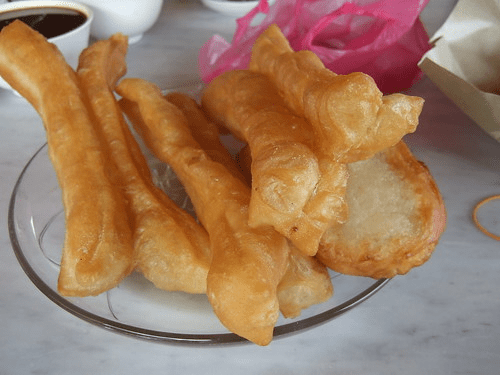
“Yes, we called it “oil-fried ghost in China and Hong Kong. They are symbolized as the corpses of a married couple in the past.”, I answered.
“Wow, that sounds horrible.”, said the Japanese girl.
And I poured out the historical background of this dish to them.
Back in the Song dynasty, the nation was frequently invaded by the ethnic minorities from the north. The emperor at the time chose appeasement as their strategy. But this method created great financial burden for the country, and the people were suffering.
However, the rise of a legendary general, whose name was Yue Fei, greatly improved the situation. Well-known for being a patriot, Yue Fei led his army defeated many enemies. Seeing the urgency of the situation, his enermy deployed a scheme to get rid of this man. They bribed the minister of Song and asked them to persuade the emperor to kill Yue Fei. The minister made up a non-exist crime for the “National Hero”, stating that Yue Fei revolted against the emperior.
At last, Yue Fei was executed. People lost their hero, and they were angry.
Unfortunately, just like their ancestors and future generations, the unhappy people had no power over the matters happening in the palace or the country. All they could do was to express their anger in a milder manner. As an ethnic group where food is an essential part in all perspectives in life, someone came up with a clever and creative idea-turning the deeply fried dough into the shape of the traitor and his wife. This explains why the dough sticks are long and slender. The were made for representing human bodies, not food. Also, the stick we see is the evolved version. The earlier version were two dough rolls sticking together, representing the husband(The traitor) and wife being tied together. Now, it turned into a crispy dish that can be paired with different dishes.
“So we are eating the corpse of the married couple? I don’t want to eat it.”, answered my colleague.
“Oh my god, it’s so scary.”, said the Japanese girl.
But I took a piece of dough stick from the bowl. Even though it carried a dark story, I can’t resist its crispy texture and taste. It tasted less salty than the sticks in Hong Kong, but it is still very good. However, I sometimes wonder if this dish is the “mental masturbation” of Chinese people. It looks hilarious, but also pathetic.

Leave a comment